University of Oxford
11a Mansfield Rd
OX1 3SZ
UK

29th October 2025
3 minutes read
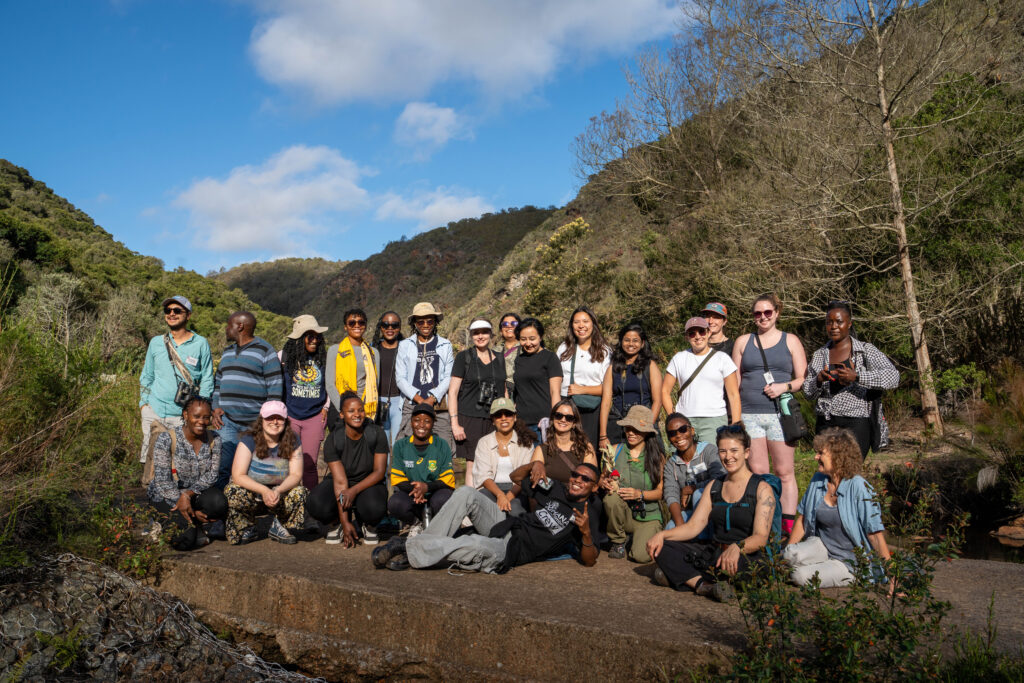
By Hannah Corsini, a participant in the Interdisciplinary Conservation Network 2025.
Sometimes, conservation does indeed feel like a wicked problem. It is a field which is simultaneously relatively emergent and critically urgent, and I’ve increasingly come to believe that it is about humans rather than wildlife. This is not to say that natural scientists are not an essential component of conservation. My undergraduate degree is in Biological Sciences, where I learnt first-hand the value of applying species distribution modelling and genetic analysis to endangered species, along with the methods of invertebrate sampling which I eventually applied to my undergraduate dissertation. What I mean is that addressing the biodiversity crisis comes only with addressing human problems.
It is for this reason that interdisciplinarity in conservation is so essential. For one thing, it helps us to recognise that conservation itself is subject to those ‘human problems’, three of which were set by the Interdisciplinary Centre for Conservation Science for early-career conservation researchers to tackle during their bi-annual Interdisciplinary Conservation Network. The three themes this year were interdisciplinarity and intersectionality in conservation; navigating conflict in area-based conservation; and equity, diversity and inclusion in conservation careers. How we look at all three will inform the future of conservation. In my chosen theme, interdisciplinarity and intersectionality in conservation, we discussed how conservation affects different subsections of society, with identities overlapping to create unique experiences. For example, Ruano-Chamoro et al. (2024) find lower perceived distributional and procedural fairness of marine management amongst migrant men in Fijan villages, which they ascribe to Fijan ownership rights descending through the male line. Although women were perceived as the biggest ‘losers’ within the management system, there was no difference between perceived benefits and losses to migrant and native women. This illustrates how different identities can inform complexities in conservation decision-making and reward-sharing. Conservation researchers need to look beyond traditional assumptions and a purely gender-based lens to create truly comprehensive understandings of the systems they study. This is a lot easier said than done – but necessary to achieving it is the first step of institutions teaching and encouraging researchers to adopt interdisciplinary and intersectional approaches.
And this is why events such as the ICN are so important! The opportunity to meet and learn from such a wide range of researchers has been invaluable – not only during discussions on issues ranging from ethics to equality in conservation, but also in a personal context, such as over a slice of pizza or a cup of rooibos tea. It was refreshing to me that everybody there – including more senior academics – was frank about the anxiety and impostor syndrome which comes with existing in spaces such as these, as well as the mental health burden of working in the environmental sector which carries a frequent shroud of doom-and-gloom. Although everybody at ICN was very different, we seemed to carry a common thread of hope for the world, and I hope to keep that burning inside of me.