





University of Oxford
11a Mansfield Rd
OX1 3SZ
UK
Our Vision
Our vision is to help transform the food system to meet global sustainability targets for environment and health. We are achieving this by working with different food system stakeholders, including farmers, food supply chains, consumers, and policymakers.
Our Research Approaches
We approach the challenge of transforming food systems for people and the planet using a variety of approaches. This includes big data on agri-environmental impacts, food system modelling, scenario analysis to understand pathways to e.g., net zero emissions in food, behavioural science, biodiversity surveys and monitoring, and information communication toolkits.
Our research cuts across outcomes that link with global sustainability targets such as the UN Sustainable Development Goals. To date, our research has investigated topics such as the climate, biodiversity, human health, and animal welfare impacts of food systems.
A key theme underlying our projects is how to communicate scientific information to food system stakeholders (consumers, producers, civil servants, policy makers, food corporations, etc) to motivate and enable sustainable decision-making. This includes having developed several information communication platforms and toolkits, such as HESTIA, the FoodMetric Tool, and the Farm Sustainability Toolkit.
We work with: farmers, businesses, organisations that interact with food, policy makers, civil servants, consumers.



Theme Members
Read Bio
E.J. Milner-Gulland
Group leader | Tasso Leventis Professor of Biodiversity. Department of Biology, University of Oxford.

Read Bio
Joseph Poore
Senior Research Fellow
Read Bio
Joe Bull
Associate Professor Tutorial Fellow
Read Bio
Ricardo Rocha
Associate Professor in Conservation Science & Tutorial Fellow of Jesus College
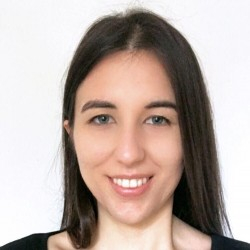
Read Bio
Valentina Caldart
Research Assistant
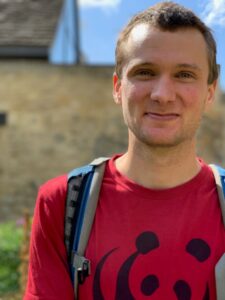
Read Bio
Mike Clark
Research Fellow
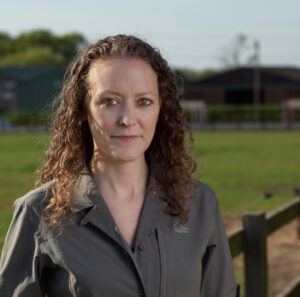
Read Bio
Juliet Wright
Research Fellow
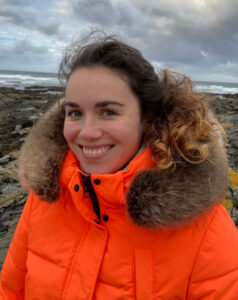
Read Bio
Harriet Bartlett
Postdoctoral Researcher
Read Bio
Talitha Bromwich
Research Fellow

Read Bio
Lucy Walker
Research Assistant
Read Bio
Alena Calvo
DPhil Student
Read Bio
Katia Sanchez Ortiz
Postdoctoral Research Assistant in Biodiversity Metrics and Modelling
Read Bio
Anneli Lofstedt
Postdoctoral Researcher
Read Bio
Emily-Jane Lewis-Brown
Postdoctoral Research Associate in Sustainable Agriculture

Read Bio
Elwyn Jones
DPhil Student
Read Bio
Juliet Telfer
Research Assistant
Read Bio
Henry Grub
Read Bio
Tom Griffin
Research Assistant

Read Bio
Yuanchao Hu
Oxford Martin School, Visiting Fellow Guangdong University of Technology, tenure-track professor
18th June 2026
Facilitation training workshop in Cameroon builds capacity for multi-stakeholder action on wild meat across Central Africa
10th April 2026
Indonesia’s first vessel buyout permanently retires shark fishing boats in East Lombok
25th February 2026
The fragmented landscape of shrimp life cycle assessments
6th February 2026
We Cannot Bend the Curve on Biodiversity Loss Without Better Food Data
11th August 2025
New blueprint to help tackle the biodiversity impacts of farming
25th July 2025
Media–public disconnect on wild meat narratives in central Africa during COVID-19
14th July 2025
Seeking to quantify contributions that fisheries operations can make to a global Nature Positive goal
4th March 2025
Tackling healthy, sustainable diets and Net Zero goals with new THRIVING project
2nd September 2024
UNIQ+ internship: reducing the environmental impacts of a college’s food.

26th October 2023
Sustainability Innovation: Evidence-Based Approach to Shrimp Farming Challenges by Oxford and Can Tho
17th July 2023
The HESTIA Farm Sustainability Toolkit and field trials.
29th June 2023
Habiba’s Internship with ICCS
6th May 2022
The drivers of wild meat consumption in rural Cameroon: Insights for wild meat alternative project design

4th October 2021
Quantifying and reducing the biodiversity impact of our food: UNIQ+ mentoring for graduate study
8th December 2020
An internship during lockdown: my time with OxPOCH
Publications
Here are some publications that represent the breadth of our work. For a more complete list of publications, please see individual researchers’ profiles.
, , , , and , “ The Fragmented Landscape of Shrimp Life Cycle Assessments: Uncovering Methodological Dependence and Analytical Blind Spots,” Reviews in Aquaculture 18, no. 2 (2026): e70132, https://doi.org/10.1111/raq.70132.
Martinić, O., Magrin, L., Poore, J. et al. Environmental impacts of intensive beef fattening: a case study in the Veneto region, Italy. npj Sustain. Agric. 4, 35 (2026). https://doi.org/10.1038/s44264-026-00151-y
Martínez-Ramón, V., Bromwich, T., Modernel, P., Poore, J. and Bull, J. (2025), Alternative Life Cycle Impact Assessment Methods for Biodiversity Footprinting Could Motivate Different Strategic Priorities: A Case Study for a Dutch Dairy Multinational. Bus Strat Env, 34: 2128-2138. https://doi.org/10.1002/bse.4072
Taylor, I., Bull, J.W., Ashton, B. et al. Nature-positive goals for an organization’s food consumption. Nat Food 4, 96–108 (2023). https://doi.org/10.1038/s43016-022-00660-2
M. Clark, M. Springmann, M. Rayner, P. Scarborough, J. Hill, D. Tilman, J.I. Macdiarmid, J. Fanzo, L. Bandy, & R.A. Harrington, Estimating the environmental impacts of 57,000 food products, Proc. Natl. Acad. Sci. U.S.A. 119 (33) e2120584119, https://doi.org/10.1073/pnas.2120584119 (2022).
Michael A. Clark et al., Global food system emissions could preclude achieving the 1.5° and 2°C climate change targets. Science 370, 705-708 (2020). https://doi.org/10.1126/science.aba7357
J. Poore, T. Nemecek, Reducing food’s environmental impacts through producers and consumers. Science 360, 987-992(2018). https://www.science.org/doi/full/10.1126/science.aaq0216
We are a group of conservation scientists working on applied research at the interface of social and ecological systems.
© Copyright 2024 Oxford University | Privacy & Cookies
Expert Website Provider | Douglass Digital