University of Oxford
11a Mansfield Rd
OX1 3SZ
UK

28th July 2026
3 minutes read
By Qingting Liao, a second-year PhD candidate at the University of Melbourne.
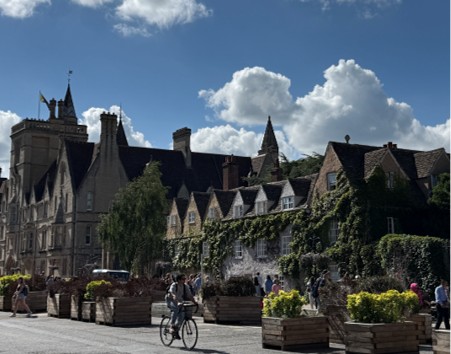
Looking back almost a month later, that little Oxford bubble still feels incredibly vivid. Surviving the heat in remarkably old buildings and soaking in the city’s rich cultural vibe set the stage for an experience that went far beyond my expectations. It reshaped my understanding of biodiversity conservation in decision-making, the true meaning of collaboration, and how we create research impact.
As a second-year PhD candidate at the University of Melbourne, my work focuses on integrating life cycle assessment (LCA) with ecological models to better assess business impacts on biodiversity. I arrived in Oxford hoping to sharpen a specific methodological question: How can we better connect broad, supply-chain-scale assessments with spatially explicit ecological information?
Before this visit, my default mindset was zeroed in on improving the spatial accuracy and ecological relevance of current biodiversity impact assessment methods. But during the Actionable Science for a Nature Positive Future workshop, and through countless informal chats over coffee and lunch, I began to see the problem differently.
When people from ecology, economics, spatial modelling, policy, business and life cycle assessment look at the exact same issue, they view it through entirely different lenses. I learned a crucial lesson: more detailed information does not automatically become more useful information. A technically advanced method may still have limited value if it does not align with the needs of decision making. The challenge is not always to produce more scientific evidence, but to connect the knowledge we already have more effectively with the actions that governments, businesses and communities need to take. For me, this also highlighted why interdisciplinary collaboration is never just an optional extra. It is the foundation of meaningful conservation research.
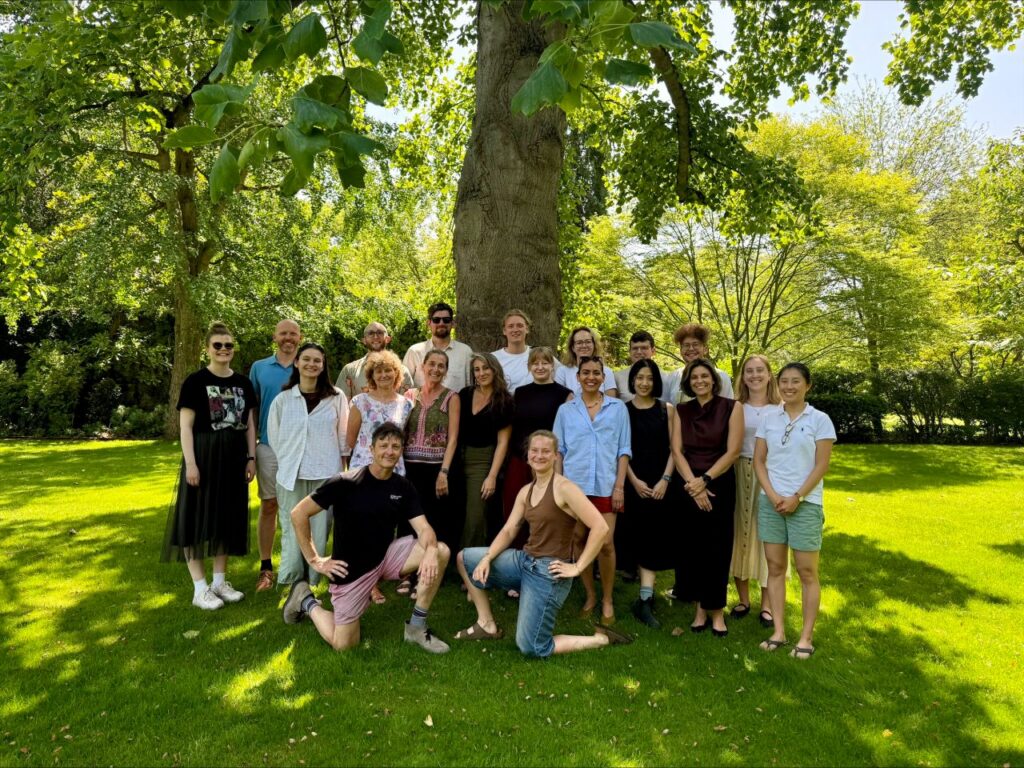
Engaging in this kind of collaboration was perhaps the most rewarding part of my trip. These two weeks gave me the rare luxury of time to simply talk with brilliant people navigating similar spaces. Conversations with Tom challenged me to think differently about how LCA might directly contribute to broader biodiversity strategies. Discussions with Benjie and Katia encouraged me to evaluate my methodological improvements from alternative angles, placing my niche research questions into a much wider decision-making context. Chatting with Yuhan and Ashley also gave me a better sense of the different ways biodiversity knowledge can be applied, from NGOs to consultancies and other forms of practice. This visit reminded me that true collaboration isn’t just born out of planned projects or joint papers. It is built gradually through time, shared trust, and the willingness to share ideas before they are fully formed.

I didn’t leave Oxford with the ultimate ‘answer’ to my PhD, and I didn’t expect to. I will continue my work linking LCA and ecological models, but I return to it with a broader view and a much more open mind. Perhaps most importantly, I now know that on the other side of the planet, there is a whole community of people driven by the same passion with the same questions. None of us has every piece of the puzzle, but we do not have to solve it alone.
The Oxford bubble may have only lasted two weeks, but perspectives and connections it sparked will stay with me for a very long time.