
University of Oxford
11a Mansfield Rd
OX1 3SZ
UK

12th October 2026
3 minutes read
By Dr. Arash Ghoddousi (University of Wageningen, ICCS alumna) and Jade Kandelaar (MSc, University of Wageningen)
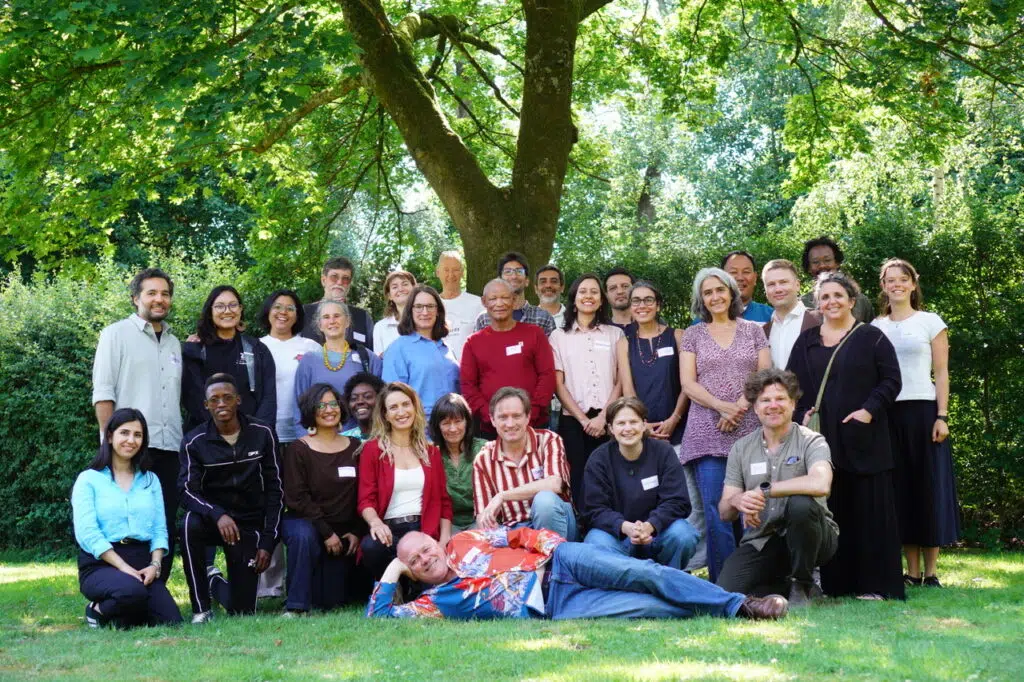
In July 2026, the Common Ground workshop in Ede, the Netherlands, brought together 32 participants from 19 countries and 6 continents, including researchers, practitioners, and representatives of Indigenous Peoples and local communities (see the list attached). The workshop featured a two-day dialogue among Indigenous representatives, academics, and conservation practitioners, during which they worked toward a shared set of recommendations for good practice in conservation research and action. Much conservation research occurs on Indigenous territories, which are among the world’s most important biodiversity hotspots.


However, interactions between researchers and Indigenous Peoples and local communities have not always been problem-free. Extractive science, power imbalances, and ethical challenges remain commonplace in many conservation research projects, despite conservation policy’s increased emphasis on the rights of local people. Therefore, developing good-practice principles for conservation research on Indigenous territories is increasingly urgent, particularly after the adoption of the Kunming-Montreal Global Biodiversity Framework in 2022, which calls for rights-based conservation grounded in both traditional and scientific knowledge. The Common Ground project builds on previous work, which led to the development of fourteen principles for good practice in participatory research (from the perspective of researchers, see this paper). Common Ground, co-led by the Wildlife Ecology and Conservation group of Wageningen University and the Interdisciplinary Centre for Conservation Science of the University of Oxford, aims to produce practical guidance for all conservation research on Indigenous territories, based on an in-depth dialogue with Indigenous collaborators.
The workshop covered cases from around the world, from Inuit-led research in Nunangat, Arctic Canada, to fire management in Mexico’s tropical forests and legal recognition of Indigenous Peoples in Nepal. Researchers and Indigenous collaborators also shared their experiences of community-led research in Kenya and joint publishing with Indigenous Peoples in Namibia, among others. Through active sharing and interaction during the different sessions, participants explored the nature of collaborations between researchers and Indigenous Peoples and local communities and sought to understand common pitfalls and opportunities. Next, participants discussed the fundamental principles that should guide ethical research practices, as well as practical steps in the research process.
The Common Ground project will continue to explore, share ideas, and exchange experiences to improve the way we do conservation science on the territories of Indigenous Peoples and local communities. Most concretely, we are working to develop a Code of Conduct that can be used across institutions by researchers in conservation and environmental science. This will include core principles of good research, guidance on practices before, during, and after fieldwork, and illustrative examples. In addition to a written format, we are exploring opportunities to communicate these guidelines through creative outputs, including a set of short films. Finally, we plan to draft a scientific manuscript on our findings for submission to peer-reviewed international conservation journals. The Common Ground Steering Committee continues to meet fortnightly to achieve these goals and plans to share the revised draft Code of Conduct with the workshop participants soon, incorporating their comments. To expedite these activities, the Steering Committee will meet in Oxford in December 2026 to finalize these outputs.