
University of Oxford
11a Mansfield Rd
OX1 3SZ
UK
3rd March 2026
4 minutes read
What do mountain gorillas’ responses to infant death reveal about their social life?
Mountain gorillas (Gorilla beringei beringei) are among the most closely monitored great apes around the world due to their endemism to the Great Lakes region, as well as for being famous as the only great apes increasing in numbers in the wild. The Dian Fossey Gorilla Fund’s extensive long-term research in Rwanda’s Volcanoes National Park has provided us with detailed information about their diet, ecology, and social systems. Yet one of the most profound aspects of their daily lives, on how they respond to death and loss, has lagged behind other studies, and this research offers one of the most detailed pictures of gorilla thanatology.
This new study, published in Primates, examines how animals respond to the death of their youngest family group members, specifically infants. Drawing on over 21 years of observational data, researchers studied the behavioral responses of mountain gorillas to 141 infant deaths.
A long-term window into gorilla ‘‘Thanatology’’
Our research team reviewed decades of field observations from habituated gorilla groups monitored by the Dian Fossey Gorilla Fund. This rich dataset enabled us to explore patterns in handling the infant corpses infant across different gorilla groups and social contexts, as well as the causes of those infant deaths.
Understanding how non-human primates respond to death offers insights into the evolution of humans’ social bonds, emotions, and awareness of death. Although infant corpse carrying (ICC) is one of the most documented thanatological behaviors in primates, little is known about it in mountain gorillas. Using long-term data from mountain gorillas monitored daily in Rwanda (2003-2025), we quantitatively examined different hypotheses, highlighting factors that influenced ICC occurrence and duration by mothers. Mothers carried their infants for up to 26 days, with a mean of 4.94 days. The likelihood and duration of ICC decreased with increasing infant age and when deaths resulted from trauma. This pattern likely reflects the increase in infant body mass with age, which makes carrying the corpse more physically challenging for the mother and the rest of the group. In addition, traumatic deaths appear to induce heightened stress in both mothers and other group members, often leading to group dispersion, therefore, the mother avoid the site. These findings provide the most extensive quantitative assessment of ICC in gorillas, revealing social and emotional complexity in their responses to death.
What do these behaviors mean?
At first glance, carrying a dead infant may appear puzzling. But such reactions are not random. They reflect deep emotional and social bonds and provide insights into gorillas’ cognitive and emotional lives. The persistence of carrying suggests strong attachment bonds between mothers and infants, even after death, and perhaps difficulties in recognizing that the infant is no longer alive.
By documenting how different factors, such as age at death or cause of death, influence the likelihood and duration of carrying, this study adds nuance to our understanding of gorilla social cognition. The participation of non-mothers highlights that gorilla social worlds are rich and complex, with affiliative ties extending beyond immediate kin.
Why this research matters
Understanding how non-human primates respond to death has broader implications for our understanding of the evolution of social cognition and emotion. Humans are well documented in how we ritualize and contextualize death, but we are not alone in showing behavioral responses to deceased group members. Studies like this one help us see how mourning-like behaviors may be rooted in shared primate sociality and emotional capacities.
For conservationists and field researchers, insights into such behaviors also enrich our understanding of gorilla well-being and social resilience, information that complements ecological and health data collected in the field.
Read the full paper here: https://link.springer.com/article/10.1007/s10329-025-01229-w
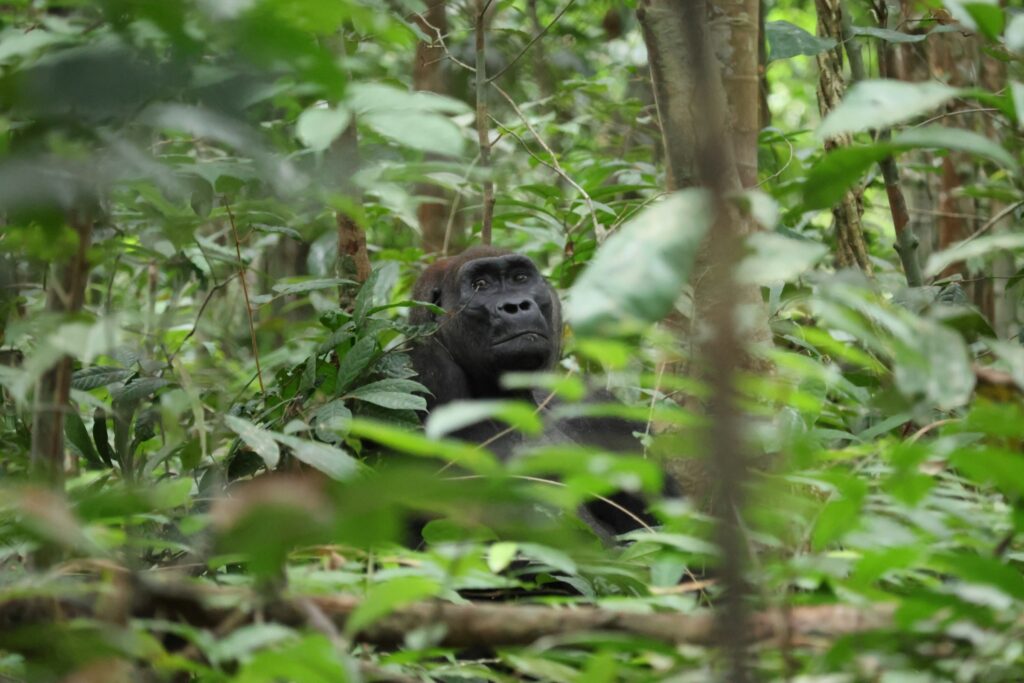
Feature image by Fabrizio Frigeni on Unsplash
Author
Inspired by prominent environmental figures, I recognized the critical impact of climate change on our planet and its inhabitants. Driven by a desire to make a tangible difference, I pursued a degree in environmental sciences, particularly focusing on Biology, to give back to society and contribute to environmental protection efforts.
Upon graduation, I was thrilled to join the Dian Fossey Gorilla Fund, where I embarked on remarkable research, protection, and conservation work dedicated to the preservation of endangered mountain gorillas. As a Research Assistant, the opportunity to interact closely with these majestic creatures for four days a week filled me with immense joy and a profound sense of purpose. This firsthand experience has deepened my appreciation and passion for biodiversity and reinforced my commitment to conservation efforts.
I firmly believe in the pivotal role of science-based conservation in addressing urgent environmental challenges, such as the detrimental effects of climate change on endangered species, their habitats, and the delicate balance between humans and the environment. My work with mountain gorillas has not only enriched my understanding of the interconnectedness of all life forms but has also instilled in me a profound sense of responsibility toward protecting our planet's natural heritage for future generations.